2 August 2026
How to Check a Handbag Before You Pay
Most of us buy bags standing in a doorway with a rider waiting. Here is what to actually look at in those two minutes, and what to ignore.
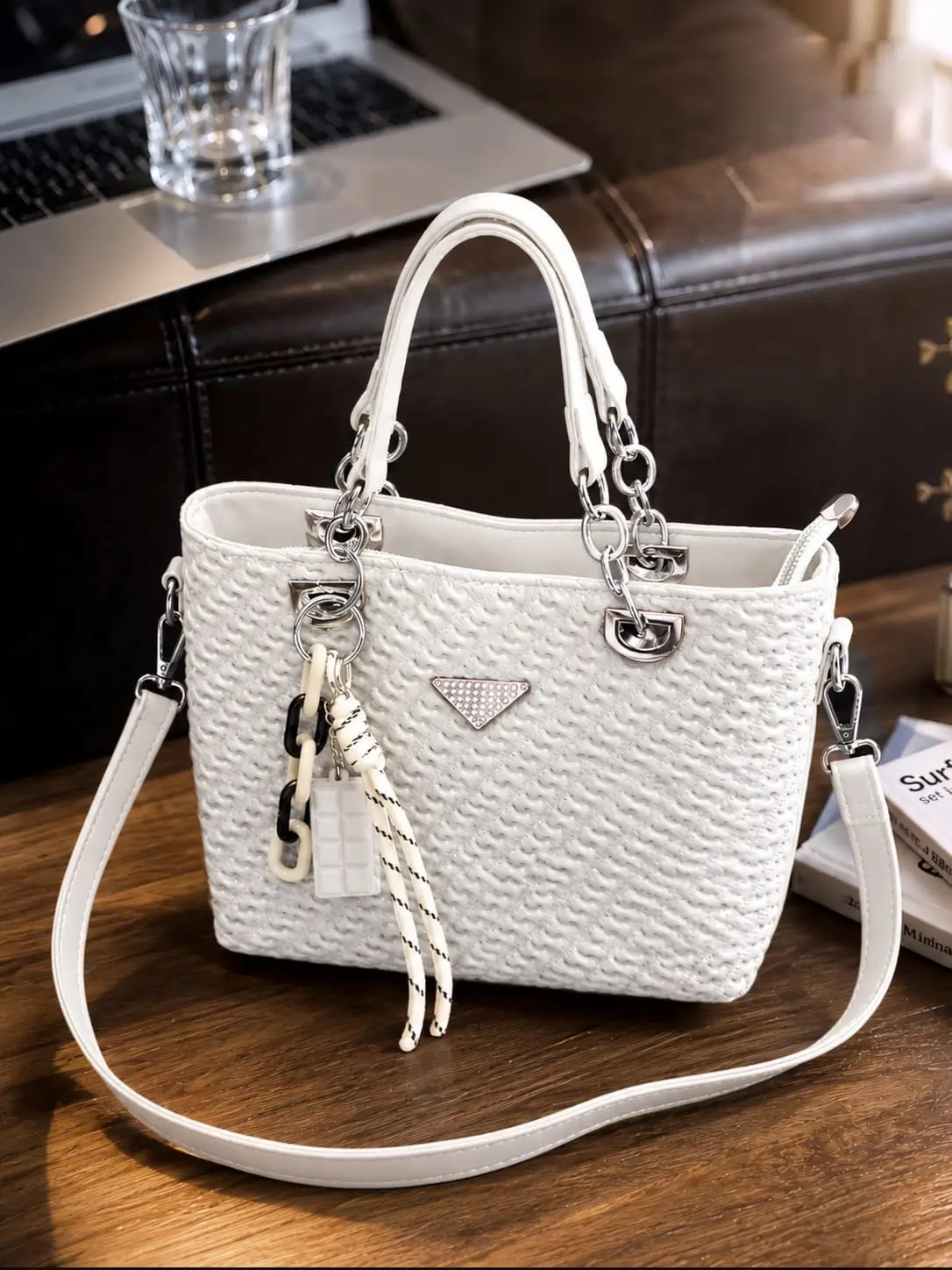
The rider is at your gate. The parcel is in your hands, still taped shut. You have maybe two minutes before this gets awkward, and somewhere inside that window you need to decide whether the bag is worth the notes in your other hand.
Most of us buy bags this way. Cash on delivery still accounts for somewhere between 60 and 70 percent of online shopping in this country, which means the inspection a shopper elsewhere does under shop lights, we do in a doorway while someone checks his watch.
That is not a worse system. It is arguably a better one, because you get to hold the thing before you commit. The problem is that most people spend those two minutes looking at the colour.
Here is what to look at instead.
First, distrust the label The single most misleading phrase in this entire industry is "genuine leather."
It sounds like a guarantee. It is closer to a warning. Leather is graded, and "genuine leather" sits near the bottom of the real-leather grades. It is made from the split layers left over after the good parts of the hide have been cut away, then coated in polymer to look presentable. It does not breathe, it does not develop character, and it tends to show serious wear inside two to five years.
The grades, briefly, from best down:
Full grain. The complete outer hide, natural markings and all. Ages beautifully, lasts decades, costs accordingly. Top grain. The outer layer lightly sanded and finished. Slightly less character, excellent durability, and the grade most quality commercial bags actually use. Genuine leather. Split leather with a coating. Real, technically. Not much else. Bonded leather. Leather dust mixed with vinyl. It de-laminates. Avoid. If you want the long version, Popov Leather's guide to leather grades is written by people who actually cut hides for a living and is worth ten minutes.
Now, the honest part. Most bags sold in Pakistan at everyday prices, including a great many sold as leather, are PU or a coated synthetic. That is not automatically a problem. A well-made PU bag with good hardware will outlast a badly made "genuine leather" one, and it will not crack in Karachi humidity the way cheap split leather does. What matters is that the material is described honestly and priced accordingly. A synthetic bag sold as synthetic at 3,000 rupees is a fair deal. The same bag sold as leather at 9,000 is not.
So the label is not the test. Your hands are.
The two minute inspection Run your thumb along the edges This is the fastest tell in the whole process. Look at the raw edge of a strap or a flap.
Real leather edges are slightly fibrous and uneven, because you are looking at the cut face of a natural material. Synthetic edges are perfectly smooth and often show a thin backing layer, a fabric weave sandwiched under the surface. Neither is disqualifying. Both tell you what you are holding.
While you are there, check whether the edges are painted or sealed. An unfinished raw edge on a bag that is meant to look premium is a corner that got cut.
Look at the grain, closely Natural grain is irregular. Pores vary in size and spacing, and the pattern never quite repeats. Printed grain on synthetic material is uniform, and if you look at a wide flat panel you can often catch the pattern repeating every few centimetres.
Tilt the bag towards the light. Repetition is the giveaway.
Count the stitches Stitching is where manufacturers save money, and it is the easiest quality signal for a non-expert to read.
Stitches should be even in length and run straight, especially around curves Look for backstitching at stress points, meaning where the strap meets the body Loose threads, skipped stitches, or a seam that wanders are all signs of a rushed line Pull gently at a seam. There should be no visible gap opening up A bag with tidy stitching and cheap material will usually outlive a bag with beautiful material and sloppy stitching.
Work the hardware Open and close every zip twice. A good zip moves smoothly and does not need to be coaxed past the corners. A bad one catches, and it will only get worse.
Then check the weight of the metal. Quality hardware feels cool and dense in your hand. Cheap hardware feels light and slightly hollow, and it is often the first thing to fail on a bag that is otherwise fine. Look at where the hardware attaches to the body too. Rivets and stitched anchors last. Glue does not.
Look inside Turn the bag inside out as far as it will go, or at least get your hand right into the corners.
You are looking for a lining that is properly stitched in rather than glued, seams that are finished rather than raw, and no smell of solvent. A strong chemical smell usually means fresh adhesive doing work that stitching should be doing.
Hang it from the strap Put the actual weight of the bag on the strap and look at the anchor points. This is where bags fail, and it is where a two minute inspection earns its keep. Any puckering, stretching, or visible strain at the join is a problem you will meet again in three months.
If the strap is adjustable, run it through its full range. The slider should hold where you put it.
Check it against the photos Obvious, and still the most common complaint in Pakistani e-commerce. Colour shifts between screen and daylight, so allow for that. Proportions do not. If the bag in your hand is noticeably smaller than the bag in the listing, or the hardware is a different finish, that is not a lighting issue.
Then decide, out loud If something is wrong, say so before you hand over money. This is the entire advantage of paying at the door and most people waste it, because refusing a parcel in front of a waiting rider feels rude.
It is not rude. It is the transaction working as designed.
What "imported" actually means You will see this word everywhere, including on our own pages, so it is worth being precise about it.
"Imported" describes where a bag was made. It says nothing about grade, material, or whether it is any good. An imported bag can be excellent or it can be landfill. The word is a fact about logistics that the market has quietly turned into a synonym for quality.
Ask what it is made of. Ask what the hardware is. Those answers mean something. "Imported" on its own does not, and any seller who leans on it instead of answering the actual question is telling you something.
If it is wrong after you have paid Doorstep inspection catches most problems, but not all of them. A zip that fails in week three was not going to announce itself at your gate.
Start with the seller, in writing, with photographs. Most legitimate businesses will sort it out, because the cost of replacing one bag is far less than the cost of the review you would otherwise write.
If that goes nowhere, you have more standing than you probably think. Consumer protection in Pakistan is provincial rather than federal, and each province runs its own consumer courts with a fairly low barrier to filing. If you are in Sindh, the governing law is the Sindh Consumer Protection Act, 2014, which covers defective goods and false description directly, and district consumer courts exist specifically to hear these cases without a lawyer being strictly necessary. Punjab and Khyber Pakhtunkhwa have their own equivalents.
Very few online disputes ever get that far. Knowing the route exists tends to change how the earlier conversation goes.
Where we stand on this We let you open the parcel and inspect the bag before you pay for it. Every order, across Pakistan, no exceptions and no argument at the door. You can read the full terms of how ordering works and how cash on delivery works with us.
We do that because we would rather lose a sale at the doorstep than gain a customer who feels cheated a week later. It also means we cannot get away with the things this article describes, which is rather the point of publishing it.
Run these checks on our bags. Run them on everyone else's too. A market where buyers know what to look for is one where it stops being profitable to sell badly made things at good prices, and that is a market we would quite like to compete in.
If you want to put the list to work, the current collection is here. Take your two minutes. We will wait.